Associates draft, partners review, and clients comment on one document rather than a chain of attachments. Each change keeps its author, sign-off is recorded before anything leaves the firm, and any clause can be read as it stood in an earlier draft.
Most of a contract’s history is invisible in the copy that gets signed. The indemnity narrowed twice and widened once, the liability cap a partner insisted on, the definition opposing counsel rewrote late on a Thursday: by the time the clean version goes out, that story is scattered across a dozen redlines in a dozen inboxes. When a clause is questioned a year later, someone has to reconstruct it. Final Wording keeps the history with the contract, down to the sentence.
See how a clause changed, and who changed it.
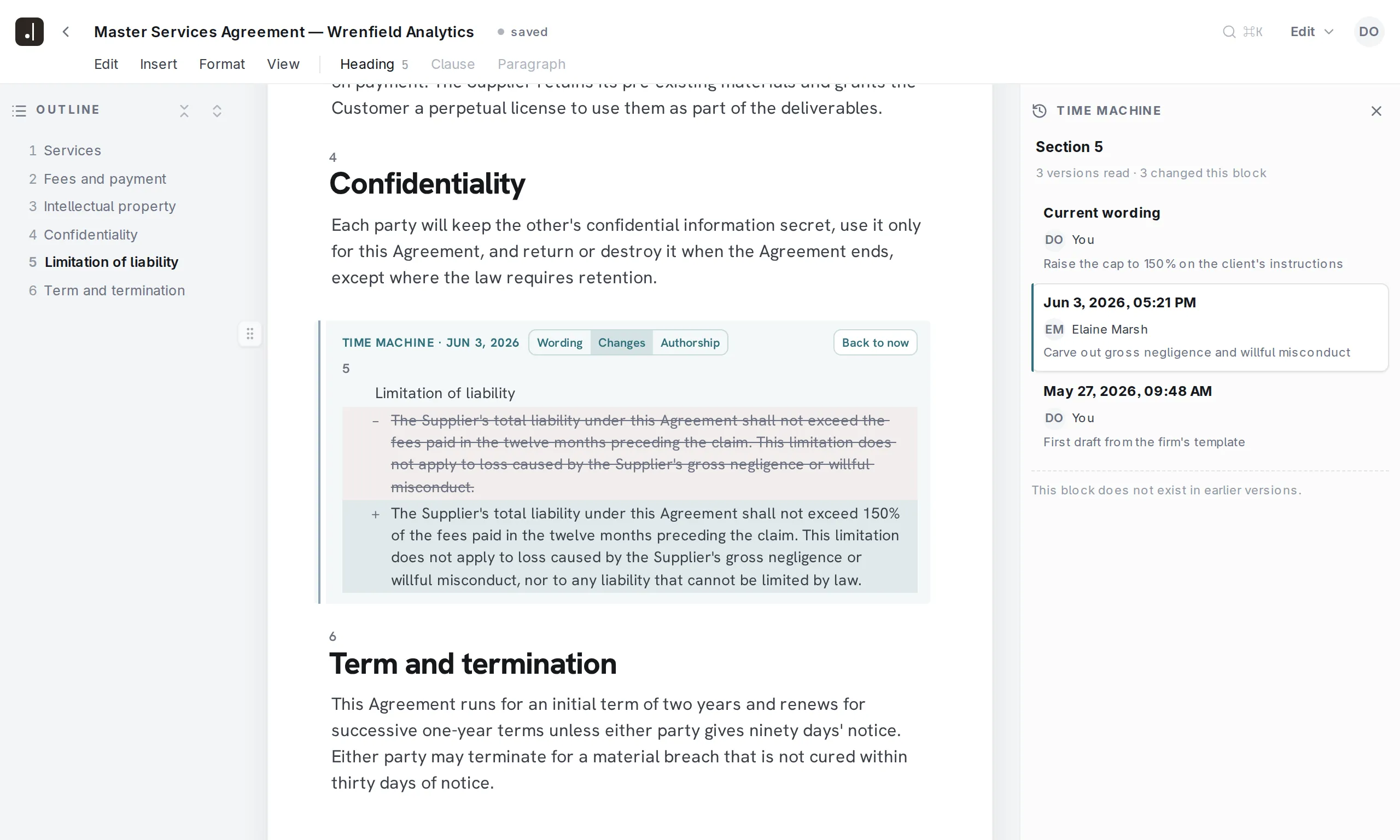
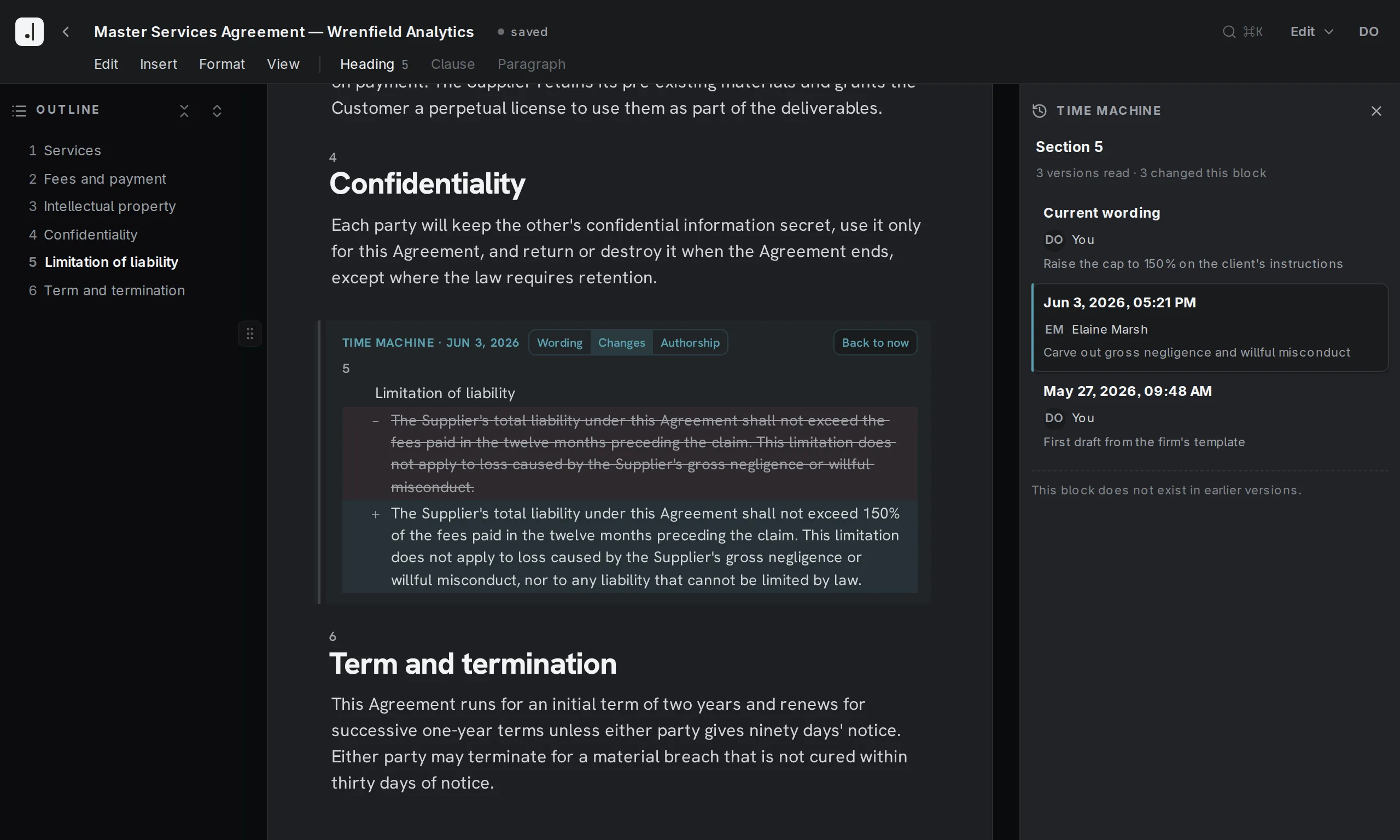
Every sentence records its author, so a clause shows which associate drafted it and which partner reworked it. The time machine opens the earlier versions of any clause beside the current text, with what was added, what was removed, by whom, and when, so nobody has to hunt for the right redline. Where an AI suggestion was accepted and kept, that passage is marked separately from the lawyer who accepted it.
The limitation-of-liability clause of a services agreement as the partner left it, compared with today’s wording, and the history of who changed it since the first draft.
Nothing leaves the firm unapproved.
Name who must sign off on a document before it goes out: the supervising partner, or anyone from a practice group. Approvals are recorded in a log that cannot be edited afterwards, and if a clause is changed after approval, that approval lapses and the clause queues for review again. An open point can be marked as blocking approval, so it cannot be forgotten in the rush to close.
Clients and counterparties comment without editing.
Invite a client or opposing counsel as a guest to a specific document. They see only what you share with them, can comment and propose wording, and never edit the text themselves. Your internal comments stay internal, and nobody who only reads, comments, or approves needs a paid seat.
Standard agreements from wordings the firm has settled.
Keep the firm’s agreed clauses as reusable wordings, so a limitation of liability reads the same in every agreement that uses it, and find every document affected when one of them changes. Engagement letters and standard agreements come from templates with the client’s details filled in; the signature-ready PDF is generated from the approved version, or exported to Word for the one-off case.
An invitation
See it on your own contracts.
Open the app with an agreement you know well, or send us a difficult one and we will set it up with you. €99 per author per month; colleagues and clients who only read, comment, or approve join free.