Draft conditions, endorsements, and exclusions with underwriting, legal, and compliance on one document rather than on copies of it. Every clause keeps its author, every approval is recorded, and every edition stays comparable with the last.
A policy form outlives the meeting that approved it. Years after an edition is filed, a claims handler reads an exclusion in a light nobody in the room anticipated, and the questions begin: who drafted it, what it replaced, whether compliance saw the final text. In most companies the answers are spread across an email chain and a folder of files called “final v7”. Final Wording keeps them with the document.
The clause, the discussion, and the decision in one place.
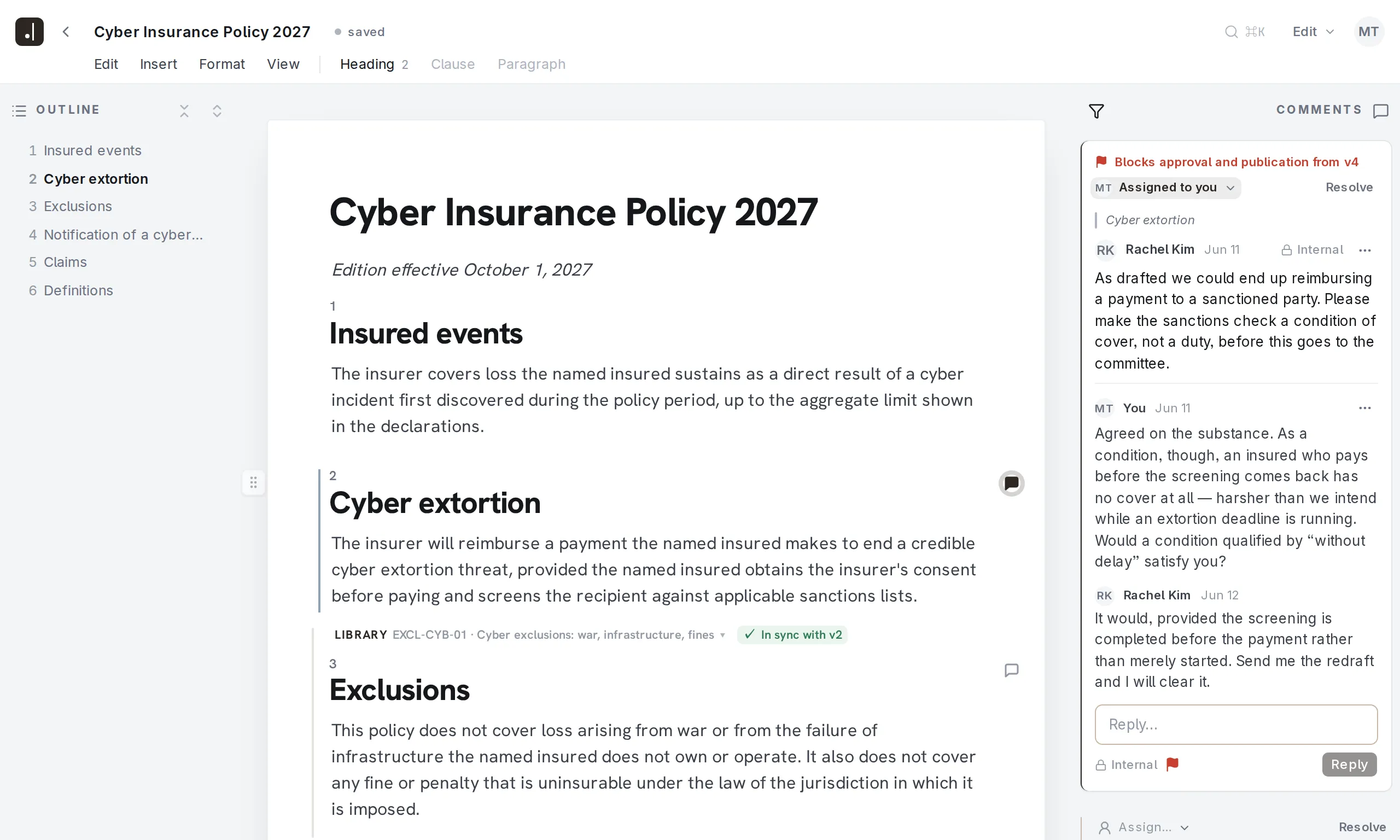
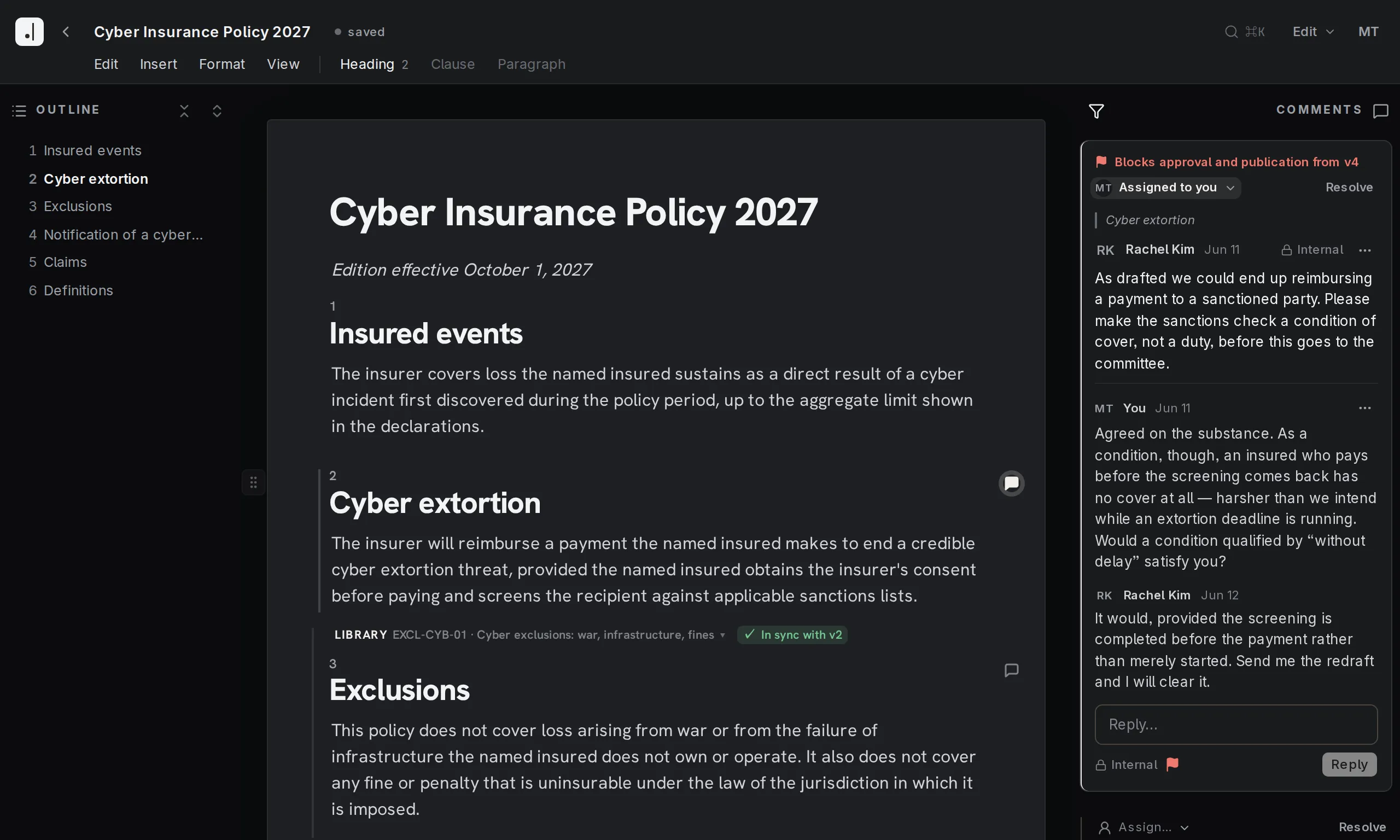
Product, underwriting, legal, and compliance work on the same document. A comment sits beside the clause it concerns and can be assigned to the person who has to settle it. Where a point must be resolved before launch, the comment is marked as blocking approval, and the edition cannot go out until it is. Internal comments stay internal, even when a broker or reinsurer has been invited to read a draft.
A compliance reviewer’s comment on the extortion-payment condition of a cyber policy: internal, assigned to product counsel, and blocking approval until it is resolved.
Approval that means something on launch day.
Before an edition goes to market, name who has to approve it: individual people, or a department from which at least one person must sign. Each approval is recorded in a log that cannot be edited afterwards. If a clause is changed after it was approved, that approval lapses and the clause queues for re-approval, so the version that ships is the version that was signed off, not a near relative of it.
A clause settled once, in every product that needs it.
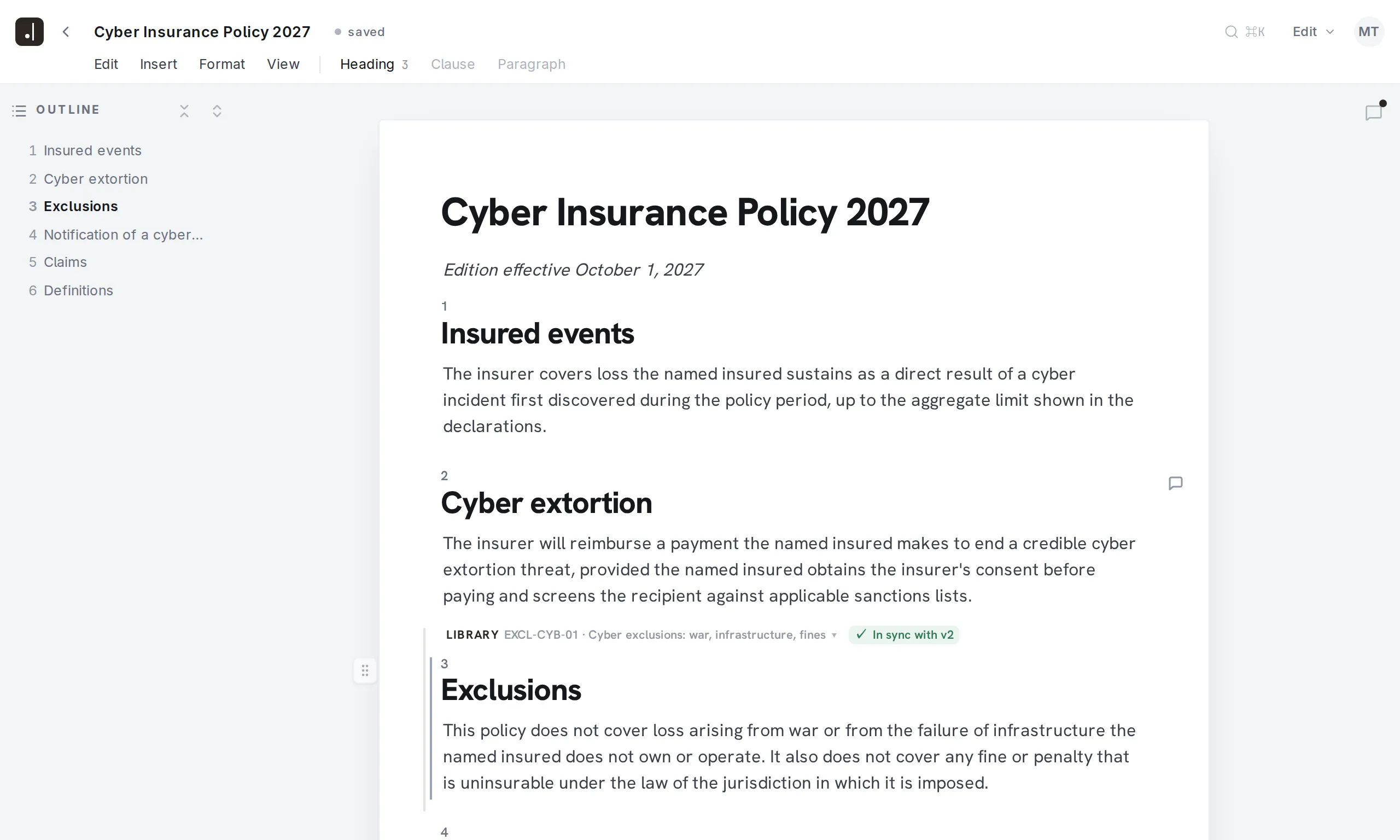
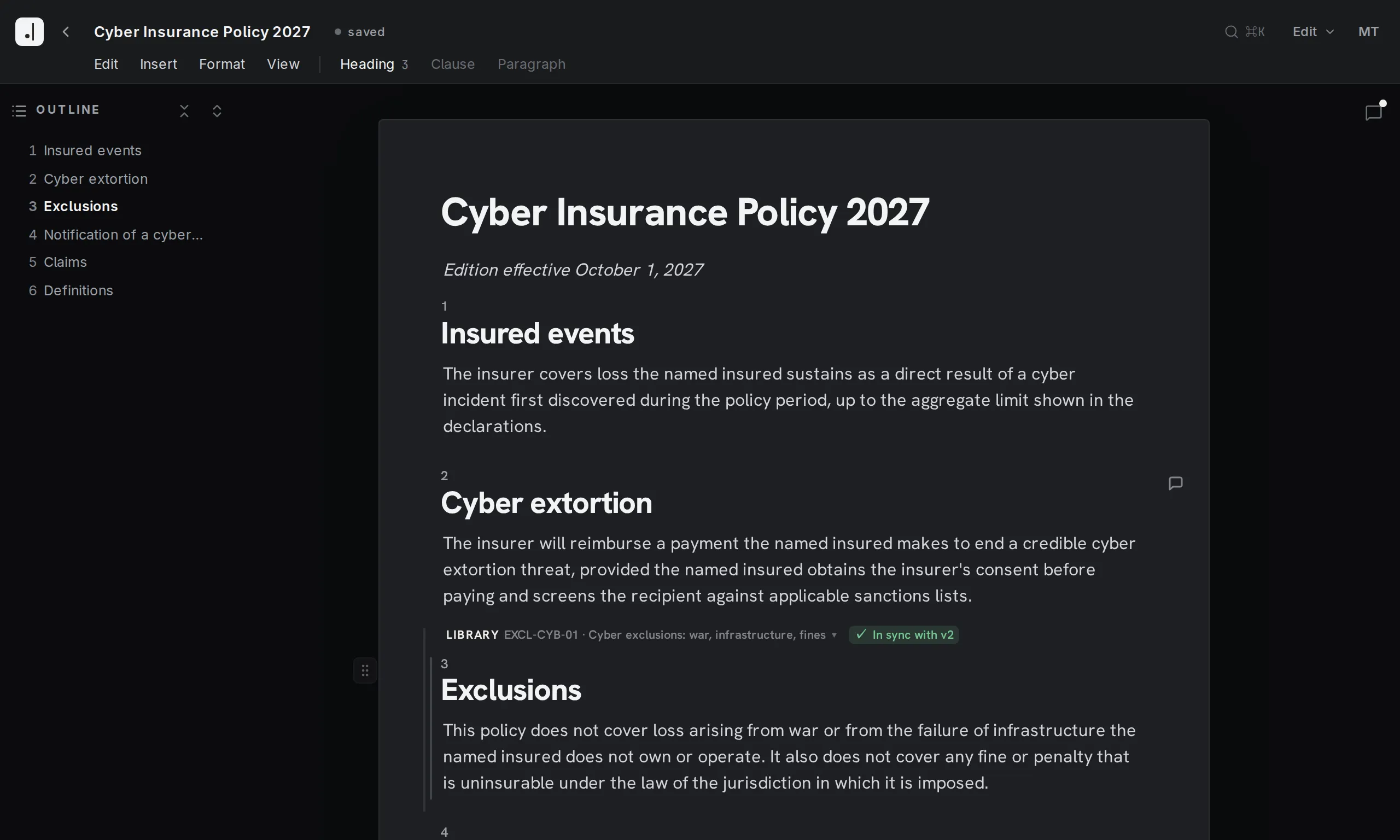
The clauses a committee spent an afternoon on — the war exclusion, the sanctions condition, the definition of a cyber incident — are kept in the library as wordings. In the document a wording reads like any other clause. A small mark says it comes from the library and which version it carries, and the text is the same in every product that uses it.
The exclusions of the cyber policy are a wording from the library. Clause 3 reads like the clauses around it and carries the library’s mark and version.
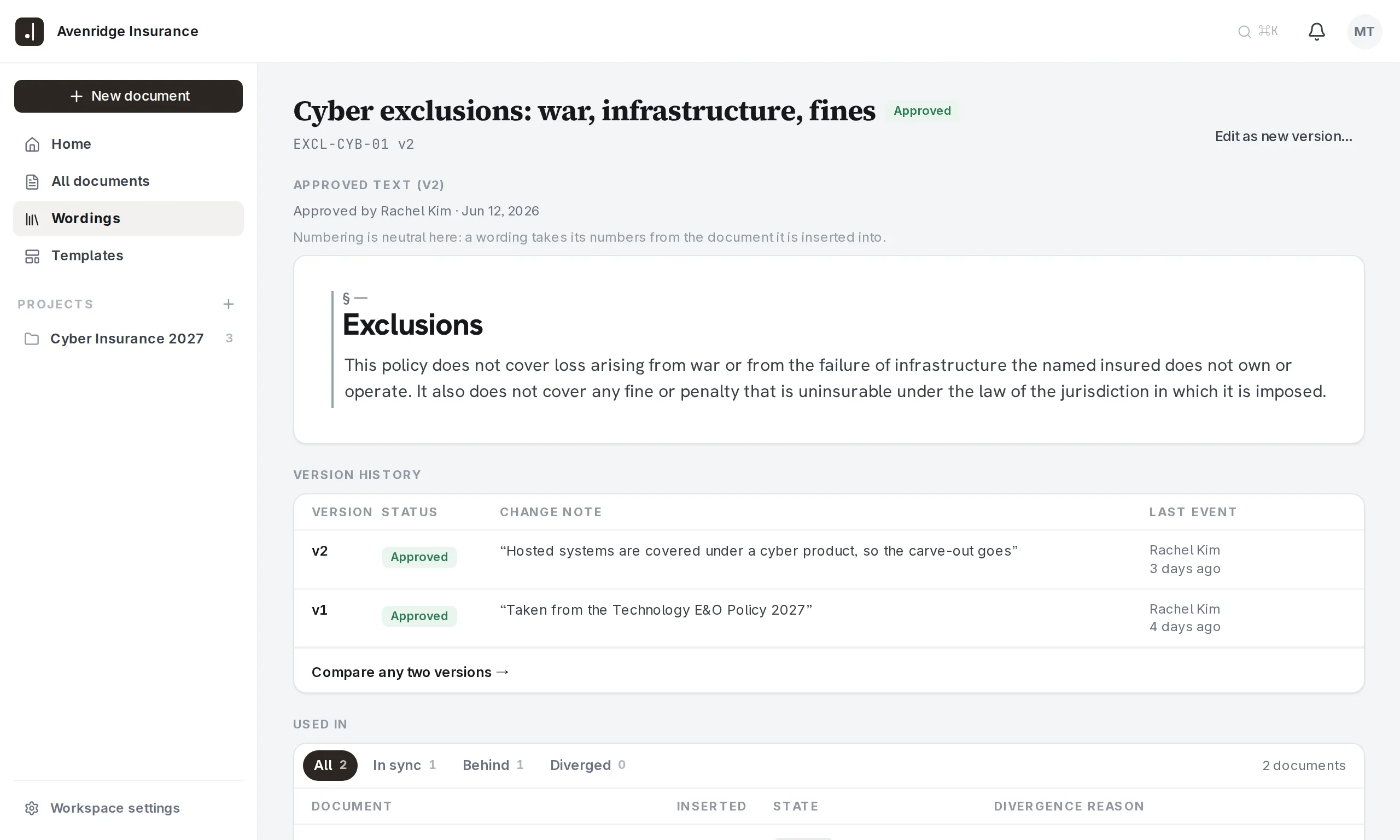
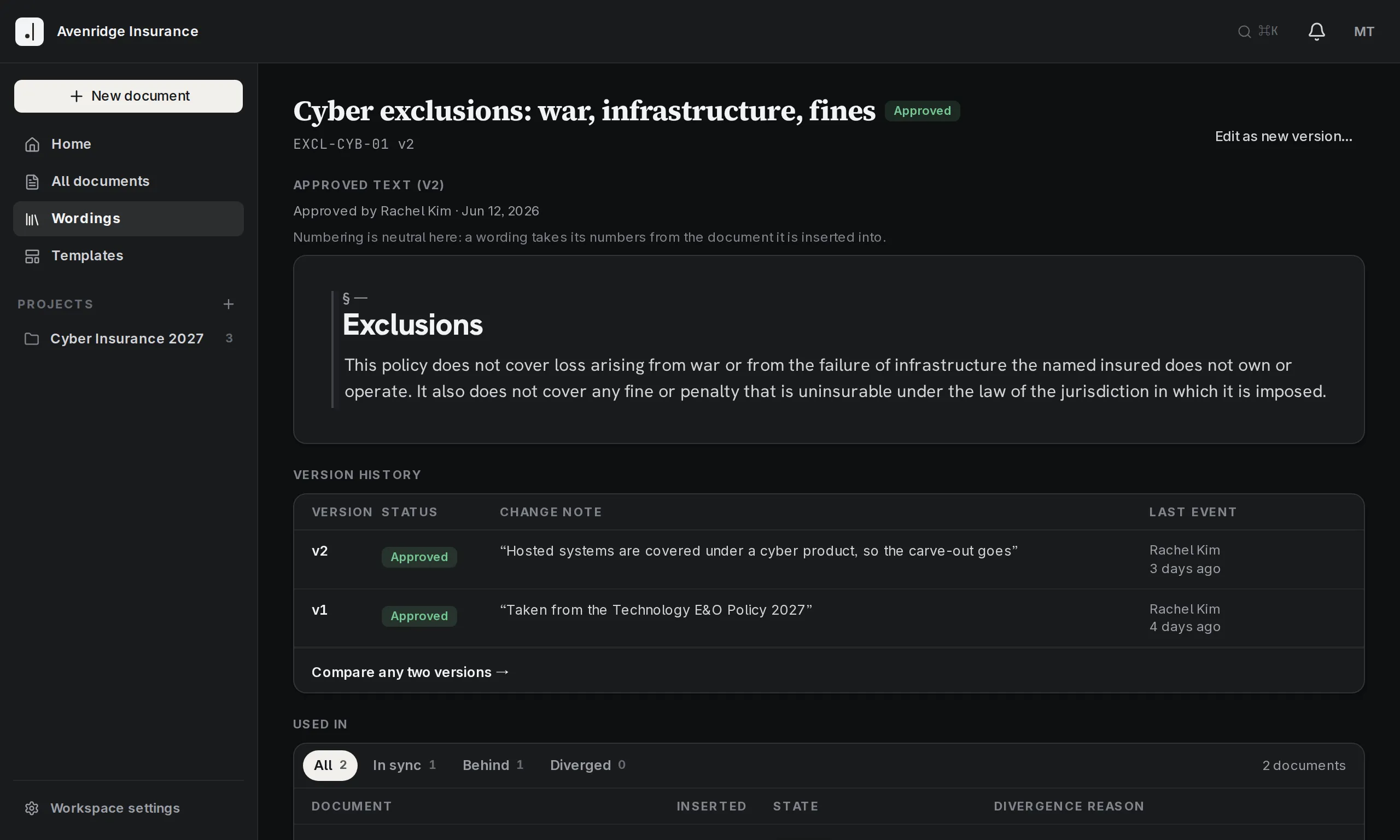
On the library side, wordings are approved by the people named for that job, compliance, say, and each one has its own versions and a list of every document it is used in. When a new version is approved, the products that use it can take it up one at a time, and a product that deliberately keeps different text records why, instead of drifting from the standard unnoticed.
The same wording in the library: approved by compliance, used in two products, one of them with a recorded reason for departing from the standard text.
Who wrote which clause, and what it said before.
Authorship is recorded down to the character. A clause shows which underwriter drafted it and which lawyer tightened it, and where an AI suggestion was accepted into the text, that passage is marked separately from the people. The time machine opens any clause’s earlier versions beside the current one, with who changed it and when, and two editions of the whole policy can be compared in one view.
An invitation
See it on your own policy form.
Open the app with a product you know inside out, or send us a difficult one and we will set it up with you. €99 per author per month; underwriters, lawyers, and committee members who only read, comment, or approve join free.